
Not all orangutans face life in the same way. Some individuals are more dominant and bold in taking up space, while others choose a different approach to meet their needs without getting involved in conflict.

Jelapat, one of the male orangutans residing on the Badak Kecil pre-release island in the Salat Island Group, Central Kalimantan, is one such individual. In his daily routine, he displays an interesting pattern of behavior to observe. For instance, when dealing with more aggressive orangutans, Jelapat tends to avoid confrontation and picks a time he deems safer to obtain supplemental food.
How Jelapat Handles Competition
On Badak Kecil Island, the distribution of supplemental food by the island’s technician team is a key part of the social dynamics in managing pre-release orangutans. Fruits distributed at regular intervals often attract multiple orangutans to the same spot, which occasionally sparks competition among them.
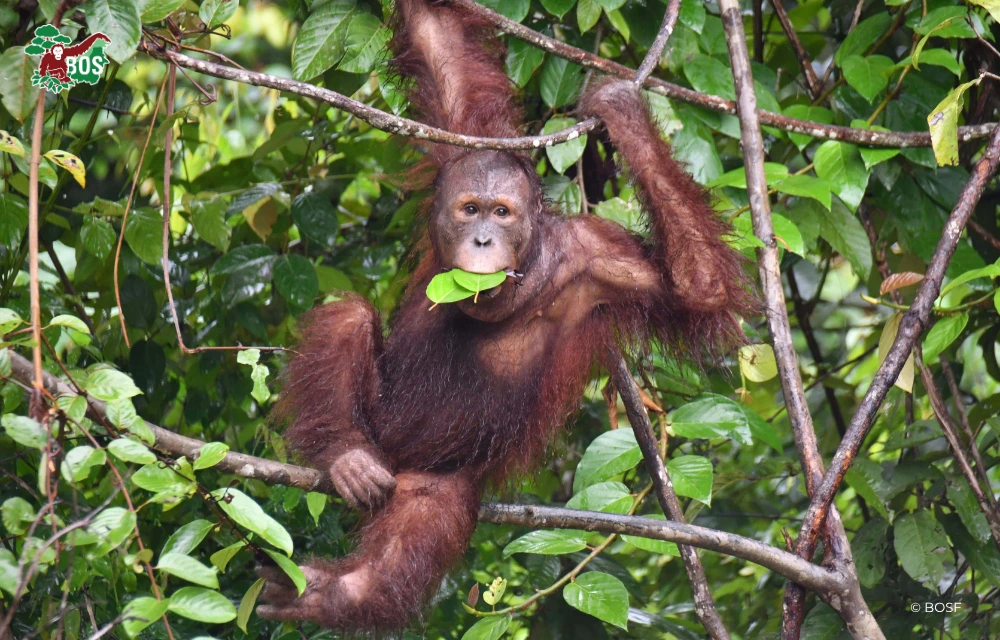
In these situations, Jelapat tends to avoid physical conflict. He prefers moving from tree to tree, observing the scene from a distance, especially when several more aggressive individuals are near the feeding platform.
This behavior becomes even clearer when the technician team arrives aboard a klotok (traditional wooden boat). From high up in the trees, Jelapat tracks the boat’s movement while keeping his distance. He does not always descend immediately or approach the feeding platform. Instead, he continues following the klotok until the surrounding environment becomes more favorable.
The technicians, well aware of Jelapat’s habits, then hand out his supplemental food when conditions permit. In this way, Jelapat secures his food without entering direct competition with other orangutans.
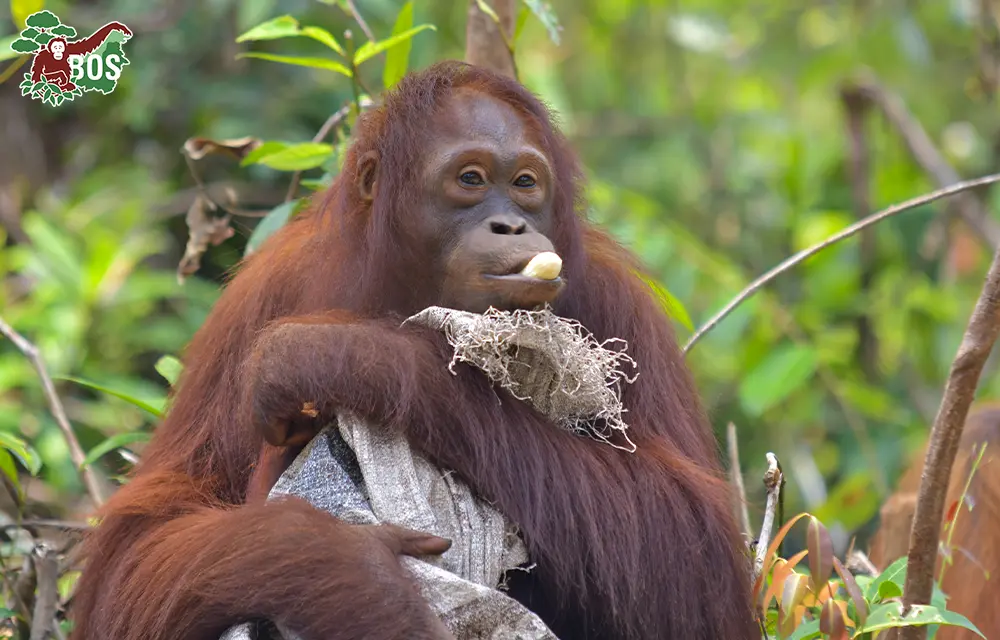
However, obtaining food does not always mean Jelapat gets to enjoy it in peace. While eating, he remains vigilant toward other orangutans around him. It is not uncommon for larger individuals to approach and take the fruit he is eating. Faced with this, Jelapat generally does not retaliate with aggressive behavior. Instead, he moves away and resumes following the klotok to catch his next feeding opportunity.
This behavior demonstrates that every orangutan can have a different way of navigating social dynamics in their environment.
Despite his unique tactic for getting supplemental food from the technicians, Jelapat does not rely entirely on humans for his sustenance.
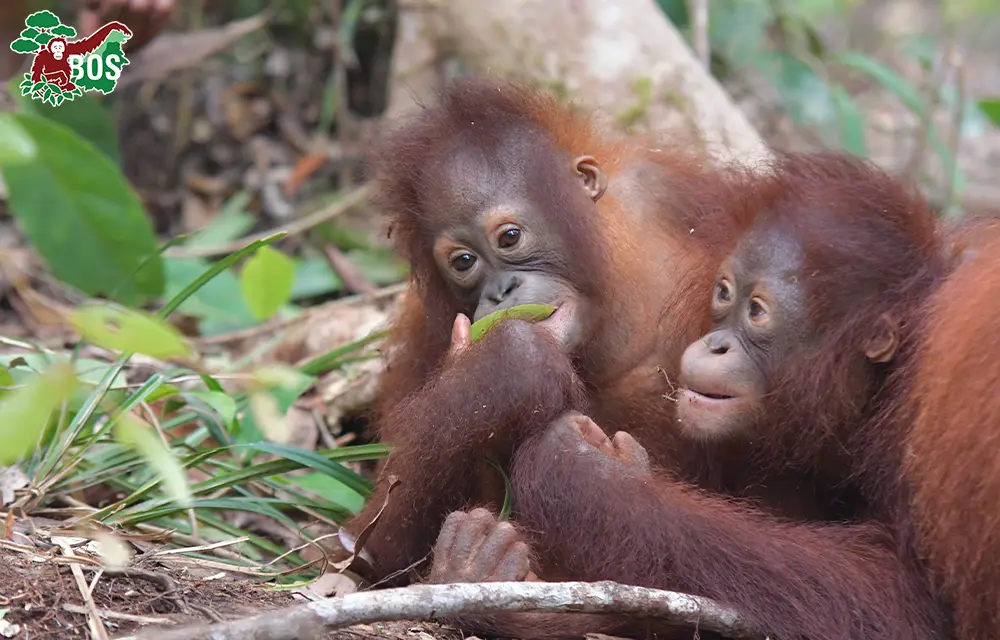
Outside of supplemental feeding times, Jelapat remains active in exploring the island and foraging for various natural food sources in the forest. He makes use of wild forest fruits as well as other plant parts, including young shoots and leaves rich in fiber and essential nutrients.
The ability to forage for natural food is a crucial part of the rehabilitation process on a pre-release island. Orangutans must show that they can utilize the resources available in their environment rather than depending solely on food provided by humans. For Jelapat, this skill goes hand in hand with his strategy for managing interactions with other orangutans. He can forage independently in the forest while also adapting his behavior in competitive situations.
A Different Way to Survive
Routine monitoring by the pre-release island’s technician team shows that Jelapat is in good physical condition and remains active in his daily routines. His ability to forage for natural food plays a vital role in maintaining his physical health.
Jelapat’s story reminds us that survival skills are not always demonstrated through sheer force or dominance. In an environment shared by many individuals with distinct personalities, the ability to read situations, avoid conflict, and utilize available resources are also key behaviors that help an orangutan navigate life.
Every orangutan has a unique character and behavior. By understanding these differences, we can continue to monitor each individual’s progress and ensure they receive the best opportunity to develop their independent survival skills.
For Jelapat, this may simply be his way of living; he does not need to be the strongest, just smart enough to find the way that works best for him.
Will you help us rescue, rehabilitate, and release orangutans back to freedom? We can only save the orangutan together. Thank you!
Text by: Sylvateja, BOSF Communication Team, Central Kalimantan.