
An update on the current forest and land fire situation in Central and East Kalimantan, including the latest condition of the orangutans under our care, the potential impacts on their habitat, and BOSF’s ongoing preparedness and response.
Current Situation
Based on our latest monitoring, BOSF’s orangutan rehabilitation centres and release sites remain operational and safe from direct fire impact. In Central Kalimantan, Nyaru Menteng and the pre-release islands (Kaja and Bangamat) have not been directly affected, and no orangutan evacuations have been necessary. In East Kalimantan, Samboja Lestari and the Kehje Sewen release site also remain safe. Based on our latest monitoring, the Bukit Batikap Protection Forest and Bukit Baka Bukit Raya National Park release areas in Central Kalimantan are likewise not currently facing direct fire threats.
The situation in Mawas, however, remains a significant concern. Approximately 49.5 hectares of the Mawas conservation area have been affected by fires. As a peatland landscape, Mawas requires particular attention because fires can be difficult to detect and extinguish and may continue smoldering below the surface. Beyond the immediate loss of vegetation, fires can affect the forest’s ecological functions, including food availability and habitat quality for orangutans and other wildlife.
Impact on Orangutans and BOSF Fire Task Force Response
The impact of forest and land fires is not limited to areas directly reached by flames. Smoke and haze can travel beyond the fire zone and affect respiratory health, while prolonged smoke exposure can also affect animal behavior and daily activities.
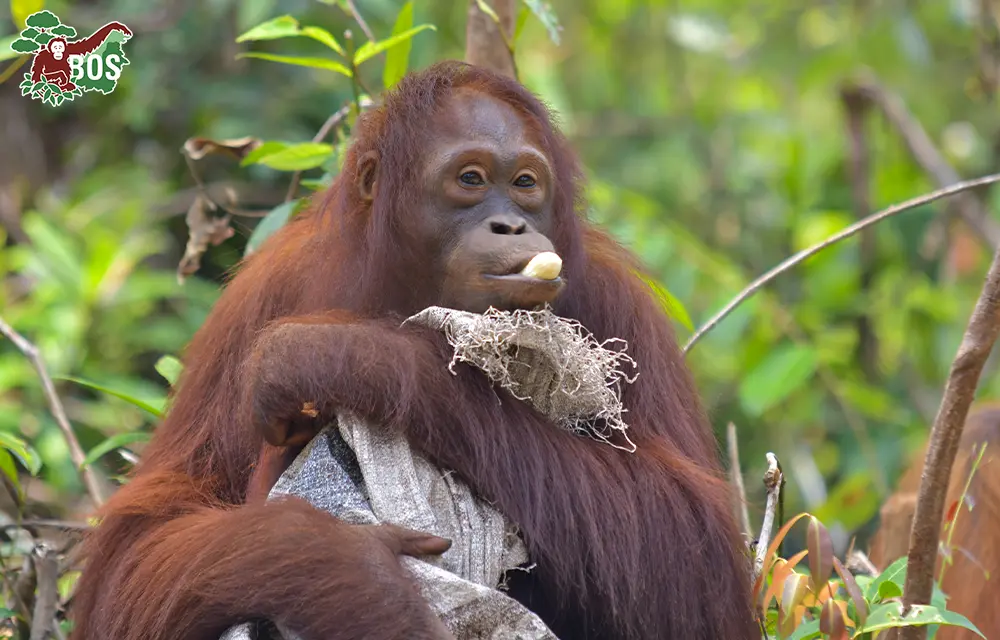
The prolonged dry season has also affected water levels around the pre-release islands. As the river levels have receded, the reduced water barrier has allowed some orangutans to leave the islands. To date, 11 orangutans have been safely evacuated and returned to the Nyaru Menteng Orangutan Rehabilitation Centre for further care and monitoring.
At present, 21 orangutans are showing respiratory symptoms consistent with ISPA, including coughing, sneezing, and nasal discharge. Our veterinary and animal care teams continue to monitor their condition and provide appropriate care and treatment.
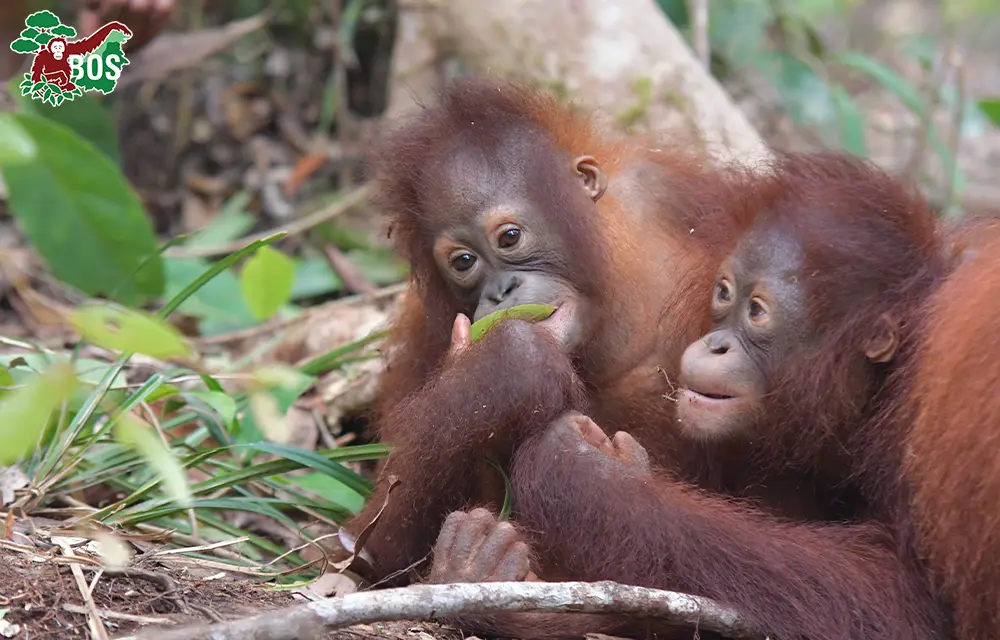
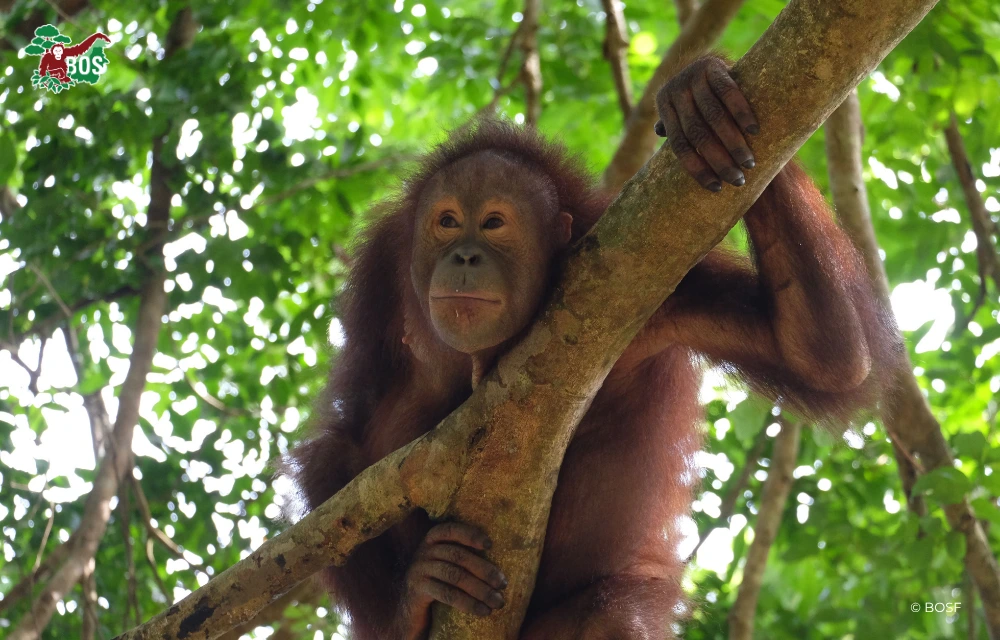
Forest school activities are currently continuing as normal, with orangutans spending up to seven hours in the forest. However, should haze conditions worsen, the duration of Forest School activities will be reassessed as a precaution, with the health and welfare of the orangutans as the primary consideration.
BOSF continues to maintain heightened preparedness across its operational areas. Our teams conduct regular hotspot monitoring using satellite information combined with field observations, patrol fire-prone areas, inspect boundaries and firebreaks, and monitor water sources, canals, and other infrastructure that may be needed for firefighting.
Fire response teams and equipment remain on standby, with resources deployed according to the level of risk at each location. BOSF also continues to coordinate with relevant government authorities, local communities, and other stakeholders to strengthen early warning, prevention, and response.
Our approach is based on the principle that prevention and early detection are more effective than waiting for a fire to reach an orangutan habitat or facility. We are therefore monitoring not only the presence of fire but also the conditions that may increase fire risk, including prolonged dry season and haze.
In Central Kalimantan, our Fire Task Force is also currently supporting firefighting efforts in areas surrounding Palangka Raya, including locations more than 10 kilometres from the Nyaru Menteng Orangutan Rehabilitation Centre. Rather than focusing solely on fire prevention and preparedness within our own operational areas, the team is supporting the Central Kalimantan Natural Resources Conservation Agency (BKSDA) and the Central Kalimantan Provincial Forestry Agency (Dinas Kehutanan Provinsi Kalimantan Tengah) in responding to fires in different locations.
This support includes firefighting both inside designated conservation areas (KSA/KPA), such as wildlife reserves and other areas specifically designated for conservation, and outside these designated conservation areas, where fires can still threaten forests, communities, and surrounding ecosystems. Through this collaboration, BOSF’s field teams are contributing their experience, personnel, and firefighting capacity to support a broader landscape-level response to the current fire situation in Central Kalimantan.
For BOSF, protecting orangutans during the current fire situation means protecting them from both the immediate threat of fire and the longer-term consequences of habitat degradation and smoke exposure. We will continue to closely monitor the situation across all of our working areas and adjust operational measures when conditions require it.
Text by: BOSF Communications Team
Will you help us rescue, rehabilitate, and release orangutans back to freedom? Thank you!