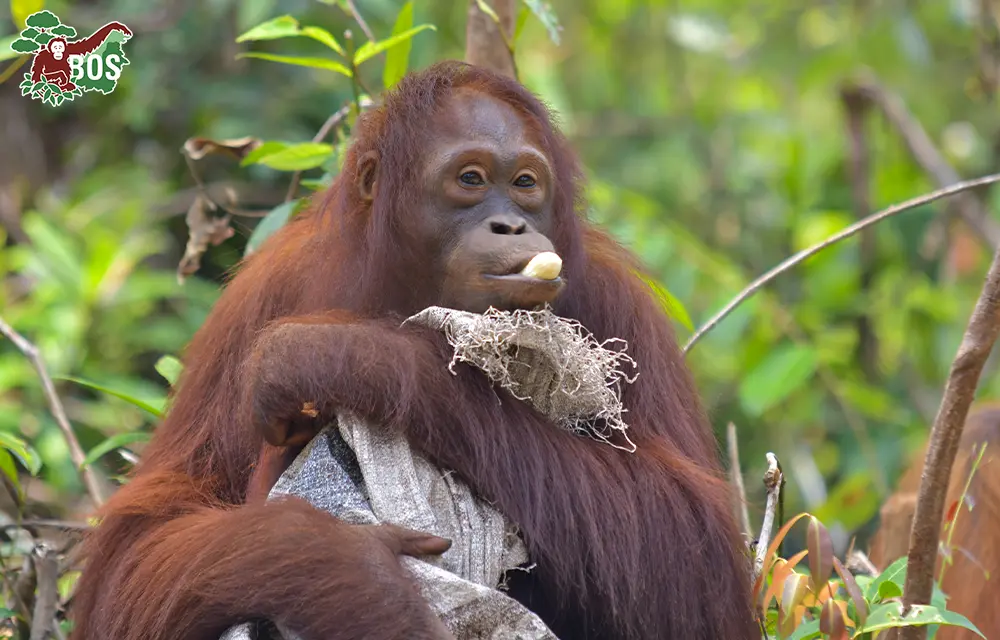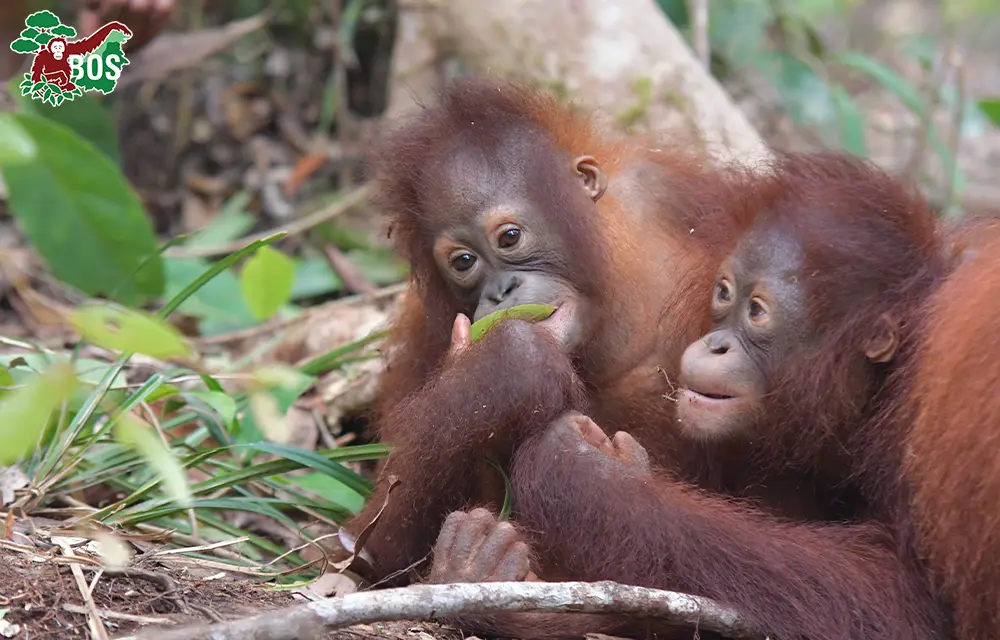


The Post-Release Monitoring (PRM) team once again recorded interesting observations of orangutans living freely in the Bukit Batikap Protected Forest, Central Kalimantan. This time, the monitoring focused on a mother orangutan named Manggo and her offspring, Melki, who were observed for three consecutive days around the main transect.

When first spotted, both Manggo and Melki were feeding in a sangkuang tree. The team immediately began observations at 13:40 WIB and continued until the pair built their night nest at around 18:00 WIB.
On the first day, Manggo’s activities were dominated by feeding, mainly on sangkuang fruit and young lunuk leaves. Melki followed closely and was observed feeding alongside its mother several times. Feeding together is an important part of the learning process for young orangutans as they begin to recognize natural food sources in the forest.
Observations continued on the next day, using the nest-to-nest method, starting from when Manggo and Melki left their morning nest until they built their night nest.
Throughout the day, Manggo’s activities were again dominated by feeding. The food items consumed included sangkuang fruit, hampaning fruit, umbut (palm shoots), and termites. Melki was observed feeding together with its mother several times, demonstrating the natural learning process through observation and imitation.
On the third day, nest-to-nest observation was conducted again. Manggo’s activities remained dominated by feeding, with food sources including sangkuang fruit, banuang fruit, and young lunuk leaves. Melki stayed close to its mother throughout the observation and was again observed feeding alongside Manggo.
The close interaction between mother and offspring during feeding is an essential part of young orangutan development, as the infant learns how to identify food sources, how to eat, and how to select appropriate foods from its mother.
During the three days of observation, both Manggo and Melki appeared healthy and active, as shown by their consistent feeding and daily activities.
Their last recorded night nest was located near the main transect, at a nest height of approximately 16–20 meters above the ground. The nest was classified as a type A nest, with a diameter of around 1–1.5 meters, built in a tree approximately 21–25 meters tall. Melki was still sleeping in the same nest as its mother, indicating that the young orangutan still has a high level of dependency.
Observations of mother and infant orangutans like Manggo and Melki provide important information about daily activity patterns, diet, infant learning processes, and the health condition of individuals in the wild.
These monitoring activities also help the team understand how orangutans adapt to their habitat and ensure that monitored individuals remain healthy and capable of surviving independently in the forest.
The story of Manggo and Melki reminds us that deep within the Bukit Batikap forest, the cycle of orangutan life continues, from mothers searching for food to infants learning how to survive in the forest that will one day become their home.
Protecting the forest means ensuring that stories like Manggo and Melki can continue for generations to come.
Text by: PRM Team at Totat Jalu Monitoring Camp, HL Batikap, Central Kalimantan
Will you help us rescue, rehabilitate, and release orangutans back to freedom? We can only save the orangutan together. Thank you!